Glossary of Terms
Click on the first letter of the credit term to view its definition.
A - B - C -
D - E - F - G
- H - I - J -
K - L - M - N -
O - P - Q -
R - S - T - U
- V - W - X -
Y - Z
A
Accelerated payment
Scheduled payment plus additional monthly payment. Leads to quicker payoff of
debt and less interest paid over life of loan.
Account monitoring
Once lenders make a "yes" decision, they might want to review your
credit report on a regular basis as they continue to manage their financial
risk. This monitoring, called account monitoring, scans credit reports for certain
risk characteristics as defined by the lender. Federal law specifically permits
lenders to monitor their accounts. When you signed your credit application,
you gave the lender permission to access your credit report from time to time.
Accounts in good standing
Lists credit items that are positive and should help your creditworthiness.
Account information includes the creditor's name and address, your account number,
the status (current, paid, closed, etc.), type and terms of the account, and
additional information as reported to us by your creditors. Some creditors may
not report to us, so all of your accounts may not be listed.
Acquisition fee
Refers to the price to purchase another company or property.
Additional monthly payment
The amount of your extra payment per month. This amount is in addition to your
minimum required payment. This payment will be used to reduce your principal
balance more quickly than if you only made your regular payment.
Adjustable rate mortgage
A mortgage where the interest rate is liable to change over the term of the
loan and which is dependent on influences such as interest rates on Treasury
securities.
Adjustment
The percentage of debt to be repaid to credit grantors in a Chapter 13 bankruptcy.
Affinity card
A card that is offered jointly by two organizations. One is a credit card issuer
and the other is a professional association, special interest group or other
non-bank company. For example, Citibank and American Airlines sponsor the Citibank
AAdvantage card.
AKA
Also Known As
Amortization
The process of fully paying off your debt by installments of principal and earned
interest over a fixed time.
Amount past due
Current amount delinquent on a loan.
Annual fee
The once-a-year cost of owning a credit card. Some credit card providers offer
cards with no annual fee. The annual fee, with interest and other fees are part
of the total cost of credit.
Annual income
Your yearly income. For married couples this is your total combined yearly income.
Annual interest rate
The amount of interest you will pay over one year, expressed as a percentage
of your balance. Maximum interest rate is 20%.
Annual Percentage Rate (APR)
A measure of how much interest credit will cost you, expressed as an annual
percentage.
Annual rate of return
The pretax rate of return on the amount you earn on savings and investments.
For example, the long-term rate of return for investments in the stocks that
make up the S&P 500 is about 11%. A savings account earns 2% to 5%.
Appraisal
An expert judgment or estimate of the quality or value of real estate, made
by an appraiser, as of a given date.
Appraisal fee
The charge for estimating the value of property offered as security.
Asset
Anything owned by an individual that has a cash value. This includes property,
goods, savings, or investments.
Association code
Describes the consumer's relationship to an account (primary responsibility,
authorized users, etc.).
Authorized user
Person permitted by a credit cardholder to charge goods and services on the
cardholder's account. The card holder is responsible for charges made by an
authorized user.
Average daily balance
The average daily balance is a method used to calculate finance charges on an
account. It is calculated by adding the outstanding balance on each day in the
billing period, and dividing that total by the number of days in the billing
period. The calculation includes new purchases and payments. The daily interest
rate is then applied to the daily balance to calculate the finance charge.
B
Bad debt
A debt that a lender has determined the borrower is not going to repay.
Balance
The total amount of money owed on a loan or credit account, or the total amount
of money in a checking or savings account. In the case of a credit card, it
includes any unpaid balance from the previous month, new purchases, cash advances,
and any charges such as an annual fee, late fee, or interest.
Balance transfer
Moving a balance from one account to another. In the case of a credit account,
the balance (debt) is moved from one credit card to another. This is often done
with special checks or forms, or may be offered as an option on some credit
card applications. Some credit card issuers may offer temporary special lower
rates for balance transfers.
Balloon loan
A short term fixed rate loan which involves small payments for a certain period
of time and one large payment for the remaining amount of the principal at a
time specified in the contract.
Balloon payment
Balloon loans require a single, lump sum payment at the end of the loan term.
This is usually a larger amount and the borrower often takes another loan to
make the payment.
Bank
An institution that accepts funds for deposits, lends money and may offer other
financial services such as insurance, brokerage, or trust accounts.
Bankcard
A credit or debit card issued by a bank or other financial institution.
Bankruptcy - Chapter 11
A chapter of the Bankruptcy Code that provides a type of bankruptcy where certain
assets of the business or individual are sold to pay off a portion of all existing
debts.
Bankruptcy - Chapter 13
A type of bankruptcy usually used by businesses rather than individuals. Used
as an alternative to liquidation under Chapter 7.
Bankruptcy - Chapter 7
A type of bankruptcy where debtors repay debts according to a plan accepted
by the debtor, the creditors and the court. Plan payments usually come from
the debtor's future income and are paid to creditors through the court systems
and the bankruptcy trustee.
Bankruptcy code
Federal laws governing the conditions and procedures under which persons and
businesses that are unable to repay their debts can seek relief.
Better Business Bureau
A voluntary, nonprofit group established by businesses to improve the code of
business practices and to define fair standards and ethics in the conduct of
the business. The Better Business Bureau is neither a government agency nor
a consumer group.
Big 3
The three largest credit reporting companies: Experian®, Equifax, and TransUnion.
Bill
A list of charges for goods sold, work performed, or services provided to the
person who has agreed to pay the costs.
Billing cycle
The number of days between statements (bills). This is generally about 25 days.
Budget
A financial plan itemizing income and expense during a projected time period.
Buydown
A lump sum payment made to the creditor by the borrower or by a third party
to reduce some or all of the consumer's debt. A buydown will reduce the amount
of remaining periodic payments to repay the indebtedness.
C
Capitalized cost
Recorded in asset accounts and then depreciated or amortized, as is appropriate
for expenditures for items with useful lives greater than one year.
Cash advances
Cash withdrawn on your credit card at a bank office or ATM. Cash advances usually
carry fees and a higher APR than other charges.
Cash down
Total amount of cash used in a purchase.
Cash on hand
Cash you have for the down payment and all closing costs.
Chapter
In bankruptcy, this term refers to a section of the Bankruptcy Code.
Charge off
Action of transferring accounts deemed uncollectible to a category such as "bad
debt" or "loss." Such accounts will usually continue to be pursued
by collectors, but are no longer considered part of a company's receivable or
profit picture because they are unlikely to be repaid in full.
Civil action
In the credit world, this is any court action against a consumer to regain money
for someone else. If successful, the civil action will usually result in a wage
assignment, child support judgment, small claims judgment or civil judgment
of money to be paid.
Closed date
The date the account was closed either at the request of the consumer or by
the creditor.
Co-maker
A creditworthy co-maker is sometimes required in situations where an applicant's
qualifications have not been established or are marginal. A co-maker is legally
responsible to repay the charges in the joint account agreement if the other
person defaults.
Cosigners
Person who pledges in writing as part of a credit contract to repay the debt
if the borrower fails to do so.
Collection agency
A business service employed to collect creditors' unpaid or past due accounts.
A collection agency is often compensated by receiving an agreed upon percentage
of any amount collected.
Consolidation loans
A loan that pays off all of your existing debt, preferably at a lower average
interest rate.
Consumer
A buyer of goods and services.
Consumer Credit Counseling Service
A nonprofit organization that helps consumers manage, and plan their use of
debt.
Consumer credit information
Also known as a credit report. This includes the account/payment history of
your credit relationships for seven years and public record history for ten
years. Name and address history is also included.
Credit
The provision of funds by a lender for a promise of future payment.
Credit accounts
Any loan or debt listed on your credit report is considered a credit account.
Credit application
A form used by a lender to obtain personal, financial, and credit information
to appraise an applicant's credit worthiness.
Credit availability
The amount of credit you have remaining on your credit account. It equals your
credit limit minus your credit balance. This is also referred to as credit available
and percentage of credit currently available.
Credit bureau
An agency that gathers information about consumers' credit relationships and
provides creditors with credit reports and scores on consumers.
Credit card
A plastic payment card which allows the owner to obtain goods and services without
the requirement to pay cash and on credit terms.
Credit card rate
Annual interest rate you pay on outstanding credit card balances.
Credit file
A file containing customer correspondence and statements, credit ratings, credit
history, and payment patterns.
Credit history
A record of how a person has borrowed and repaid debts.
Credit investigation
In terms of your credit report, an investigation is the process a consumer credit
reporting agency goes through in order to verify credit report information disputed
by a consumer. The credit grantor who supplied the information will be contacted
to verify the disputed information. If the information is verified, it remains
on the report; if it is not, the information is deleted or corrected.
Credit limit
The maximum amount an individual or business can borrow in connection with a
specific loan.
Credit line
The maximum dollar amount that can be charged on a specific card account.
Credit report
A report containing information about a consumer's identity, credit relationships,
some court actions, consumers statements, and previous inquiries into that file.
Credit reporting agency
Also known as a credit bureau. An agency that checks credit information and
keeps files on people who apply for and use credit.
Credit scores
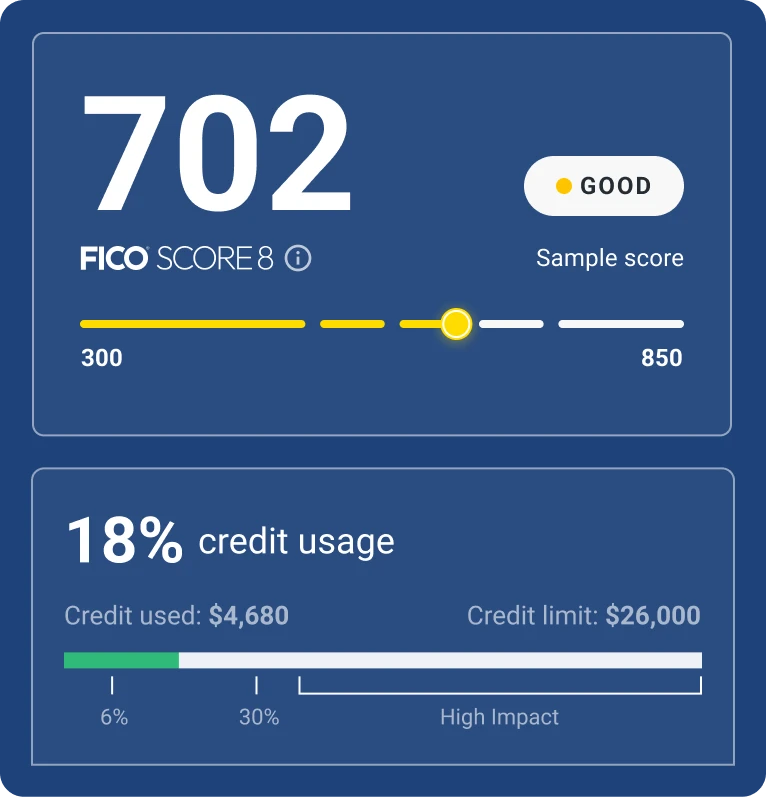
A credit score summarizes your credit history into a number that lets lenders
and others quickly know how responsible you have been with your past credit
accounts and loans. Lenders use formulas to calculate your score based on information
from your credit report. These scores help predict how likely you are to pay
your loans or credit cards. While lenders each may use their own scoring models
to determine how you rate, personal details such as race, gender, or religion
are not considered when determining your score.
- PLUS Score
A credit score developed by Experian, calculated based on information contained
in an individual credit file PLUS Score can range from 330 to 830, with a higher
score indicating lower credit risk. The formula used to calculate your PLUS
Score is based on the most current consumer information available, using a similar
formula to those used by lenders.
Your credit score can change daily as your credit file is updated, so it is
calculated at the time a lender requests your credit report and reflects your
current credit standing. The information in your credit files at the different
credit bureaus may vary, which means that your scores may be different for each
bureau, including your PLUS Score.
Credit union
A mutual association formed by persons with a common affiliation such as employees,
a union or a religious group in which pooled savings are made. The funds are
invested for appreciation and members may borrow at competitive rates.
Creditor
One who extends credit to borrowers.
D
Debt
A specified sum of money that is legally owed from one to another.
Debt consolidation
The act of paying off all outstanding debt with a single loan.
Debt-to-income ratio
The ratio, expressed as a percentage, which results when a borrower’s
monthly payment obligation on long-term debts is divided by his or her gross
monthly income.
Default
Failure of a debtor to make loan repayments as agreed to in a loan contract.
Delinquent/Derogatory accounts
Accounts classified according to the time past due. Common classifications are
30, 60, 90 and 120 days past due. Can also include accounts that have been charged
off, gone to collectors, liens, bankruptcies or court judgment.
Direct marketing
Direct marketing differs from general marketing in that the result of a promotion
is measurable in terms of response. Direct marketing is also largely dependent
upon the use of customer files and lists. Direct marketing is utilized by virtually
every type of business and organization; however, the primary users are magazine
publishers, catalog houses, political campaign organizations, and financial
institutions.
Discharged
A debt that a court declares no longer needs to be repaid due to bankruptcy.
Alimony, child support, liability for willful and malicious conduct, and certain
student loans cannot be discharged.
Disclosure
A credit report provided to the consumer which shows the "nature or substance"
of what is in his or her credit records as outlined by the FCRA (Fair Credit
Reporting Act).
Dismissed
When a consumer files for bankruptcy, the judge may decide to not allow the
consumer to continue with the bankruptcy. If the judge rules against the petition,
all debts are reinstated and the bankruptcy petition is "dismissed".
Disposition fee
A charge by a car dealer to defray the cost of preparing and selling the vehicle
at the end of the lease if the vehicle is not purchased by the consumer.
Down payment
Amount paid up front when arranging credit. For leases, a down payment is often
called a "capital lost reduction".
E
Economic index
Represents a consolidated average of a major economic component - such as wholesale
prices, housing starts or inflation - that is used to measure economic health.
Economic indicator
Key statistics of the economy that reveal the direction of the economy; for
example, the unemployment rate and the inflation rate.
End-user
The person or company who is the ultimate recipient of information. Sometimes
information passes a number of different processes before reaching the "end
user".
Equal Credit Opportunity Act (ECOA)
Part of the Consumer Credit Protection Act, prohibiting creditors from discriminating
against credit applicants on the basis of race, color, religion, national origin,
sex, marital status, age and receipt of public assistance.
Equifax
One of the three credit reporting bureaus, headquartered in Atlanta, GA. The
other two are Experian® and TransUnion.
Escrow
Property or money held by a third party until the agreed upon obligations of
a contract are met.
Experian
One of the three major credit reporting bureaus. The other two are Equifax and
TransUnion.
F
Fair Credit and Charge Disclosure Act
Part of the Truth In Lending Act requiring the disclosure of the costs involved
in credit card plans that are offered by mail, telephone, or applications distributed
to the general public.
Fair Credit Billing Act (FCBA)
A federal law that provides a specific error resolution procedure to protect
credit card customers from making payments on inaccurate billings.
Fair Credit Reporting Act (FCRA)
A federal law governing the actions of credit reporting agencies. Enacted by
the US Congress in 1970 and amended in 1996, the FCRA protects consumer rights
by limiting access to your credit report.
Fair Debt Collection Practices Act (FDCPA)
A federal law prohibiting abusive and unfair debt collection practices.
Federal tax withholding
Total amount of moneys withheld from your take-home pay for federal taxes. This
amount will appear on your pay stub.
Federal Trade Commission
A federal agency which administers and enforces rules to prevent unfair business
practices.
Fees
Any of a variety of charges.
FICA
The amount withheld from your paycheck for Social Security taxes. You pay half
of your FICA tax; your employer pays the other half.
Finance charge
Amount of interest charged to you by a lender. Finance charges are usually included
in the monthly payment total.
Financial aid
A monetary aid to remove the cost barriers that may prevent a person from pursuing
a higher education. Assistance is available from a variety of programs funded
by federal, state, university and private sources. These can include: grants,
scholarships, loans, and employment opportunities.
Financial institution
An enterprise such as a bank whose primary business and function is to collect
money from the public and invest it in financial assets such as stocks, bonds,
and loans to others.
Fixed rate
An annual percentage interest rate that does not change during the term of the
loan.
Flagging an account
Identifying an account for a specific purpose or reason and temporarily suspending
activity on the account until the problem that caused it to be flagged is resolved.
Foreclosure
When a debtor fails to meet his obligations to pay back a loan, the lender can
take back possession of any property (such as a house) used to secure repayment
for the loan. Foreclosure refers to the lender’s legal action to take
possession of the property. Fraud
Any act or practice resulting in loss of someone’s rights or property.
Usually consists of making false and misleading representations with the intention
of cheating another person.
G
Generation identifier
An addition to someone's name which indicates there are others in the same family
with the same name. Examples: Sammy Davis, Jr., King George the III, Thomas
Keating IV.
Grace period
The period before interest begins to accrue on new purchases.
Guarantor
The person ultimately responsible for paying a bill.
H
Hearing impaired consumer service
A special phone number available for hearing impaired consumers who have a TDD.
The number for Experian is 1-800-972-0322.
High risk
High risk consumers have delinquencies, bankruptcies, charge-offs or public
record items on their credit report. These are indications to lenders that a
consumer has been an irresponsible user of credit, and will likely be so in
the future. High risk consumers may only be able to get credit with very high
interest rates, if at all.
Home appreciated at:
Annual appreciation you estimate in the home you are purchasing. Not all homes
appreciate at all times and can lose value (depreciate) as well.
Home equity closing costs
Any costs other than interest added to the home equity loan. Costs can include
any appraiser fees, points paid, or other misc. fees. Costs can be paid up front
or added to the loan balance.
Home equity interest rate (APR)
Annual percentage rate for the home equity loan.
Home equity line of credit (HELOC)
A mortgage loan that allows the borrower to obtain multiple advances of the
loan proceeds at his or her discretion, up to an amount that represents a specified
percentage of the borrower’s equity in property.
I
Identity theft
A form of fraud in which a consumer's financial information is illegally acquired
for the purpose of making unauthorized purchases and transactions with their
credit cards, or with funds from their checking or savings accounts.
Income tax rate
This is your federal, state and local income tax rates combined. Your income
tax rate is important in determining the amount you can save if you use a home
equity loan to consolidate your debt.
Index
A number indicating a change in quantity, as of prices, relative to the magnitude
at some specified point usually taken as 100.
Inquiry
There are two types of inquiry. A hard inquiry is when you have applied for
credit, which gives the lender permission to pull your credit report. All hard
inquiries are available for all credit grantors to review. A soft inquiry is
only available for you to see. It does not influence your credit score. This
type of inquiry includes your request for your credit report or pre-screen inquiries
for credit grantors.
Installment debt
Credit accounts in which the debt is divided into amounts to be paid successively
at specified intervals until the debt is paid off.
Installment loans
Debt to be paid at regular times over a specified period.
Interest rates
The percent, per unit of time, of the total sum borrowed that is charged by
a bank or financial institution for the use of their money.
Investigative consumer reports
These are consumer reports that are usually ordered by a prospective employer
for sensitive jobs where background checks and security clearances are necessary.
An investigative consumer report might contain information obtained from a credit
report, but it is more comprehensive than a credit report. It contains subjective
material on an individual's character, habits and mode of living, obtained through
interviewing the associates and neighbors of the person being investigated.
Experian does not provide investigative consumer reports.
Investment rate of return
The amount you expect to earn on your investments. This is the return that you
would make if you were to invest your down payment, security deposit or closing
costs instead of using it in your purchase or lease of an auto or purchase of
a home.
Involuntary bankruptcy
A petition filed by certain credit grantors (instead of by the individual or
business) to have a debtor judged bankrupt. If the bankruptcy is granted, it
is known as an involuntary bankruptcy.
Issuer
A company or public sector entity with shares, bonds or other securities listed
on a stock exchange.
Item-specific statement
On your credit report, you have the right to offer an explanation about a particular
account or public record item. Only one item-specific statement may be added
per item. An item-specific statement is also known as a "consumer statement".
J
Joint accounts
Typically a bank account in the names of two (or more) persons. Arrangements
can be made such that either individual or all signatures are required when
drawing checks.
Judgment granted
A final determination issued by a court for the rights of the parties involved
in a lawsuit.
K
KOBA code
A one or two alpha character code that defines or classifies what industry or
type of service a given company offers.
L
Late payment
A delinquent payment; a failure to deliver a loan or debt payment on or before
the time agreed.
Lender
A person or company that offers to lend money to a borrower for a given period
of time. The borrower is obliged to repay the loan with installments or single
payment together with specified interest.
Lien
Legal document used to create a security interest in another's property. A lien
is often given as a security for the payment of a debt. A lien can also be placed
against a consumer for failure to pay the city, county, state, or federal government
money that is owed.
Line of credit
A line of credit works like a credit card, except you don't charge purchases.
Instead, a person with a line of credit would use checks to make purchases which
are drawn on a line of credit rather than on an amount on deposit. A line of
credit will have a maximum amount, like a credit limit.
Loan origination rate
The percentage the lending institution charges to cover some of its processing
costs in making a loan in addition to the interest it will earn. Example: 1%
for a $100,000 home equals $1,000.
Loan payment
The payment you make to your creditor on a loan. Also, the amount of your standard
monthly payment.
Loan type
Home, auto, personal, and home equity are all loan types. The two most common
loans types, home equity and personal, differ in fees, rates, and tax deductibility
of interest. Home equity loans often have higher fees, but usually have lower
rates and a tax deduction for interest paid. Personal loans do not have a tax
deduction for interest paid, and have a higher interest rate, but often have
lower upfront fees. These are important considerations when choosing a loan.
Low risk
Low risk consumers have paid their bills on time, held their credit accounts
for several years, and do not have large outstanding balances. In general, they
have proven to lenders that they are responsible, prudent users of credit. Low
risk consumers are able to quickly obtain credit at the most favorable interest
rates.
M
Major purchase
A purchase for a substantial amount of money, such as a car or refrigerator
or home.
Market value
How much something is worth in the marketplace. Market value can change based
on supply and demand. In terms of automobiles, it is frequently the value of
the automobile after a lease term is over.
Medicare
A U.S. government program of hospital insurance and voluntary medical insurance
for persons aged 65 and over, and for certain disabled persons under 65. A certain
amount is withheld from your take-home pay to cover Medicare.
Medium high-risk
Medium high-risk consumers may have had delinquencies, charge-offs, or public
record items, but not as many incidents as high-risk consumers. Although such
consumers may still receive credit offers, they will most likely pay high interest
rates because of their risk level.
Medium low risk
Medium low risk consumers have generally exhibited responsible credit behavior,
but most likely have one or two delinquencies on their credit report.
Medium risk
Medium risk consumers most likely have credit reports that have one or more
delinquencies, high outstanding debt or relatively new credit accounts. Such
consumers are usually able to obtain credit, but at higher interest rates than
medium low or low risk consumers.
Monthly PMI payment
Monthly cost of Private Mortgage Insurance (PMI). For home loans secured with
less than 20% down, PMI is commonly estimated at .5% of your loan balance each
year and is used in this calculator. Monthly PMI is calculated by multiplying
your starting loan balance by your PMI percent and dividing by 12. When your
equity exceeds 20% of the original purchase price, your PMI payment should drop
to zero. However, you should contact your lender when this occurs, as it will
often not be removed automatically.
Mortgage
A written agreement to repay a loan. The agreement is secured by a mortgage,
serves as proof of an indebtedness, and states the manner in which it shall
be paid. The note states the actual amount of the debt that the mortgage secures
and renders the mortgagor personally responsible for repayment.
Mortgage loan
Short-term or long-term use of property or money with the consent of the owner
of the property or money. Usually the loan of money has an agreed-to repayment
schedule and an interest charge.
Most recent date
The date your account information was most recently updated.
N
Net home price
Selling price of your home after subtracting any sales commissions.
Net house payment
Your house payment minus the value of the tax deduction and principal payment.
Notice of results
If you've requested an investigation of information on your credit report, you're
entitled to receive a Notice of Results if your information was updated or deleted.
You may request that the credit bureau send the corrected information in your
credit history to credit grantors and employers who reviewed your information
within a specific period of time. If your investigation does not result in a
change to your credit history, the results will not be sent.
Number of points paid
The total number of points (prepaid interest) used to reduce the interest rate
of your mortgage. Each point equals 1% of your mortgage balance.
O
Obsolescence
The term used to describe how long negative information should stay in a credit
file before it is no longer considered relevant to the credit granting decision.
The FCRA has determined the obsolescence period to be 10 years in the case of
bankruptcy and 7 years in all other instances.
Opt-out
A consumer request for removal of his/her name from future targeted marketing
solicitations by direct marketers, banks and credit reporting agencies. Consumers
may opt-out by calling 1-888-5OPTOUT.
Outstanding debt
The total amount of debt you owe to your creditors.
Overdue
An outstanding bill or account not paid when due.
P
Paid accounts
Total number of accounts that have been paid satisfactorily or paid after having
been previously delinquent.
Past due
An account reflecting late payments or payments received after an agreed upon
time for settlement.
Payment status
Reflects the history of payments on an account, including any delinquencies
or late payments occurring during the previous seven years (current account,
delinquent 30 days, current was 60 days past due, redeemed repossession, charge
off - not paying, etc.).
Permissible purposes
As defined by the Federal Fair Credit Reporting Act, and various state regulators,
the circumstances under which a third party may obtain a consumer credit report.
Permissible purposes include credit transactions, employment purposes, insurance
underwriting, government financial responsibility laws, court orders, subpoenas,
written instructions of the consumer, or legitimate business needs.
Personal information
The personal information section on your credit report includes your legal name
(and any name variations), date and year of birth, employers, and information
about your residence. This information is reported to the credit bureau by your
creditors or other sources.
Personal statement
You can add a personal statement that will appear at the beginning of your credit
report. Your personal statement may include a general explanation about the
information on your report.
Petition
If a consumer files for bankruptcy, but a judge has not yet ruled that it can
proceed, the process is known as a bankruptcy petition.
PITI percent of annual income
The percent of your annual income the financial institution will allow you to
use for your "Principal, Interest, Tax and Insurance" payment for
your home. The customary amount of your income to be used for PITI is 28%, but
will vary among lenders.
PLUS Score
A credit score developed by Experian, calculated based on information contained
in an individual credit file PLUS Score can range from 330 to 830, with a higher
score indicating lower credit risk. The formula used to calculate your PLUS
Score is based on the most current consumer information available, using a similar
formula to those used by lenders.
Your credit score can change daily as your credit file is updated, so it is
calculated at the time a lender requests your credit report and reflects your
current credit standing. The information in your credit files at the different
credit bureaus may vary, which means that your scores may be different for each
bureau, including your PLUS Score.Point scoring
The assignment of values for characteristics identified as indicators of a person's
creditworthiness. Point scoring is based on the same evaluation process used
by a credit grantor in the analysis of an applicant's creditworthiness.
Potentially negative items
Any information on your credit report that may have a negative impact on your
ability to obtain credit. This may include your account information (type and
terms), payment history, bankruptcy, lien, or judgment information.
Pre-approved credit card
Pre-approved offers are mailed to your home because you meet the risk criteria
of the company making the offer. A pre-approved offer is not guaranteed. You
can still be turned down when you apply.
Pre-screen
A process where lenders review consumer's credit information for a guaranteed
credit offer. See also pre-approved.
Principal
The amount of debt, not including interest. The face value of a note, mortgage,
etc.
Principal payment
Total of principal paid per month on your mortgage.
Privacy policy
A statement that discloses a company's practices related to their collection
and used personal information, which the information may be shared with and
for what purposes, what choices are available to the consumer regarding the
collection and use of their data, what security procedure is used, and how a
consumer can correct any inaccuracies.
Property tax rate
The rate at which your property will be taxed per year. Example: 1% for a $100,000
home equals $100 per year in property taxes.
Public record data
When included as part of the credit report, this information is limited to tax
liens, lawsuits and judgments that relate to the consumer's debt obligations.
Purchase price
The amount, before taxes, fees and closing costs that you pay for an item like
a home or auto.
Q
Qualifying income
Minimum monthly income range required to qualify for a loan payment.
R
Rate earned on savings
This is the rate you earn on short-term savings. For most people this is currently
4% to 5% annually.
Rate of depreciation
The rate of depreciation gauges how fast your new purchase - automobile, computer,
etc. - will lose its market value. High depreciation rate is about 20% per year,
medium is 15% per year and low is 10% per year.
Rate cap
The maximum amount that the interest rate on an adjustable rate mortgage can
rise in a single year.
Real estate secured debt
Any debt that has been used to buy a home or has been secured by your home.
For example, a home equity loan can be a real estate secured debt.
Released
This means that a lien has been satisfied and is no longer in effect.
Repossession
After a borrower is significantly behind on payments, a creditor takes possession
of property pledged as collateral on a loan contract to pay off the remaining
loan amount.
Request an investigation
If you believe that information on your report is inaccurate, you can request
an investigation of the information. The credit bureaus will ask the sources
of the information to check their records at no cost to you. Incorrect information
will be corrected; information that cannot be verified will be deleted. Accurate
information cannot be removed from your credit report. An investigation may
take up to 30 days. When it is complete, the credit bureau will send you the
results.
Request for your credit history
This is a request for your personal credit report. Consumers' credit reports
contain information credit grantors can't see such as a detailed history of
when your credit information is viewed by credit grantors or employers.
Residual percent
For leases, this is the remaining value of the property you're leasing at the
end of the lease term. The higher this amount, the lower your lease payment
will be.
Retail card
A plastic payment card issued by a specific retailer or group of retailers for
limited use at their own outlets.
Revolving account
An account from which credit is automatically available up to a predetermined
maximum limit as long as a customer makes regular payments.
Revolving debt
Debt owned on an account that the borrower can repeatedly use and pay back without
having to reapply every time credit is used. Credit cards are the most common
type of revolving debt.
Risk level
In determining credit scores, lenders place you in a risk category that compares
you to a large number of consumers with similar credit histories. This allows
lenders to compare "apple to apples," ensuring that your credit behavior
is judged in a context that is relevant and fair.
Risk score models
A tool used by credit grantors to predict future payment behavior of consumers.
S
Sales price
Total price for an item, including taxes and fees.
Sales tax
Total amount of sales tax on a purchase.
Sales tax rate
Percentage sales tax to be charged on a purchase. Sales tax for buying is charged
on the total sales amount. In the case of a lease, sales tax is only due on
the amount of the lease and is added to each lease payment.
Satisfactory accounts
Accounts that are current or have been paid satisfactorily.
Satisfied
If a consumer has paid all the money the court says he/she owes, the judgment
is called "satisfied."
Scheduled payment
Payment due at a scheduled time. In the case of a home, the monthly principal
and interest payment is based on your original mortgage amount, term and interest
rate.
Score factors
Score factors are elements from your credit report that drive your credit score.
For example, such elements as your total debt, types of accounts, number of
late payments, and age of accounts are what determine your credit score. Score
factors can have a positive or negative affect on your credit score.
Secured credit
Loan for which some form of acceptable collateral, such as a house, car, or
deposit has been pledged.
Security
Real or personal property that a borrower pledges as collateral for the term
of a loan. Should the borrower fail to repay, the creditor may take ownership
of the secured property by following legal procedures.
Security alert
A statement that is added to one's credit report when a credit bureau is notified
that the consumer may be a victim of fraud. It remains on file for 90 days.
A security alert suggests that creditors should request proof of identification
before granting credit in that person's name. Once a security alert has been
added, your report will no longer be available for online viewing. You may still
receive your report through the mail.
Security interest
The creditor's right to take property or a portion of property offered as security
(collateral) for a loan.
Seller's points
A lump sum paid by the seller to the buyer's creditor to reduce the cost of
the loan to the buyer. This payment is either required by the creditor or volunteered
by the seller, usually in a loan to buy real estate. One point equals one percent
of the loan amount.
Service charge
A component of some finance charges, such as the fee for triggering an overdraft
checking account into use.
Settlement costs
This includes all fees paid to the lender and mortgage broker, and certain other
fees paid to third parties for services that the lender requires the borrower
to purchase. The remaining settlement costs involve payments to third parties,
which lenders do not control and for which they cannot ordinarily provide accurate
information until later in the origination process. As the borrower, you should
shop around because the lender knows what they are.
State tax withholding
Total amount withheld for state taxes.
Statement
A bill summarizing all of the activity on an account within a specified period
of time. A credit card statement is the monthly bill from a credit card issuer
that describes and summarizes the activity on an account. Most credit card statements
include the outstanding balance, purchases, payments, credits, finance charges,
and other transactions for the month.
Statement date
The date on which a statement is created, and the date used to calculate finance
charges (interest) for the statement period.
Statistical models
Statistical models are used to generate credit scores. Modelers analyze credit
reports from millions of consumers to identify the variable that most likely
determine future creditworthiness, which is expressed in the form of a credit
score.
Stock index
A device that measures changes in the price of a basket of stocks, and represents
the changes using a single figure.
Surcharge
An extra fee for using a service. Surcharges are also referred to as convenience
fees and are commonly presented when using ATMs.
T
Target marketing
The process in which merchants solicit groups of consumers who are most likely
to be interested in their product or service.
Tax savings
Items that lower your taxable income. Also, the value of the tax deduction you
receive by deducting interest payments to your mortgage and home property taxes.
For example, if you have $900 in interest and $100 property taxes per month,
the monthly value of the tax deduction would be $280 with a tax rate of 28%.
Taxable fees
Any fee that is subject to sales tax. When buying a home, this usually includes
title transfer fees.
Term
The length of time you have to pay back a loan.
Term in months
Number of months you have to pay back a loan.
Term in years
The number of years over which you have to pay back a loan. The most common
mortgage terms are 15 and 30 years.
Thin file
A credit report that has few if any credit accounts or inquiry history. Young
adults, and people new to the United States will typically have thin files until
they begin to establish credit relationships.
Third-party collectors
Collectors who are under contract to collect debts for a credit department or
credit company; collection agencies.
Total closing costs
Total up front costs paid before your loan can be issued. This is the sum of
the loan origination fee, amount paid for points and any additional closing
costs.
Total debt percent of annual income
The percentage of your annual income your financial institution will allow you
to use for installment payments debt. Installment debt includes car payments,
credit card payments, other loan payments and your "Principal, Interest,
Tax, and Insurance" payment for your home.
Total down payment
Amount available as a down payment to be paid up front, rather than financed.
In a car purchase, your down payment will be your cash available plus your trade-in,
less any outstanding loan balance on your trade-in. In a home purchase, your
down payment will be your available cash after closing costs.
Total interest
Sum of all interest paid. In the case of a mortgage, this total interest amount
assumes that there are no prepayments of principal.
Total payments
Total of all monthly payments over the term of the loan. This total payment
amount assumes that there are no prepayments of principal.
Trade allowance
Total dollar amount given on your trade-in vehicle during a car purchase.
Trade line
Each specific credit relationship with a business is tracked over time as a
trade line on your credit report. This means that you can have multiple accounts
with the same bank, but your payment history will be identified separately for
each account. Trade line information on your credit report includes company,
date account was opened, credit limit, type of account, balance owed and payment
profile.
TransUnion
One of the three major credit reporting bureaus. The other two are Experian®
and Equifax.
Transaction fees
Fee charged for certain uses of your credit line, credit card or ATM card. Example:
fees charged to get a cash advance from an ATM, or to buy theater tickets over
the phone.
Truth in Lending Act
Title I of the Consumer Protection Act. Requires that most categories of lenders
disclose the annual interest rate, the total dollar cost and other terms of
loans and credit sales.
U
Unsecured credit
Credit for which no collateral has been pledged. Loans made under this arrangement
are sometimes called signature loans. A loan granted only on the basis of a
customer's written agreement that the loan amount will be paid.
Up-front costs
Any fees you are required to pay in advance before you receive a loan. This
could include appraisal fees, loan origination fees and document preparation
fees, etc.
V
Vacated
Indicates a court judgment that was rendered void and set aside.
Variable rate
A variable rate loan allows for an interest rate that may fluctuate over the
life of the loan. The rate is often tied to an index that reflects changes in
market rates of interest. A fluctuation in the rate causes changes in either
the payments or the length of the loan term. Limits are often placed on the
degree to which the interest rate or the payments can vary. A fixed rate loan,
on the other hand, carries the same interest rate for the life of the loan.
Verification
With regard to credit reports, verification is the process of checking the
accuracy of information. Credit grantors or employers may use your credit report
information to verify your application information is correct or you may verify
your own credit information in case of inaccuracy. Credit bureaus will accept
documentation from the consumer to help in the verification of data.
Victim statement
A statement that can be added to a consumer's credit report to alert credit
grantors that the consumer's identification has been used fraudulently to obtain
credit. The statement requests the credit grantor verbally contact the consumer
by telephone before issuing credit. It remains on file for seven years unless
the consumer requests to have it removed.
W
Withdrawn
When a decision is made to not pursue a bankruptcy, a lien, etc.
Writ of replevin
Legal document issued by a court authorizing repossession of property used to
secure a loan.
X
Y
Years to save
The number of years you have to save to meet your goal.
Z